

For more than a decade, the battery industry has measured progress by chemistry.
Higher energy density. Faster charging. Lower cost.
Those metrics aren’t going away, but they’re no longer enough.
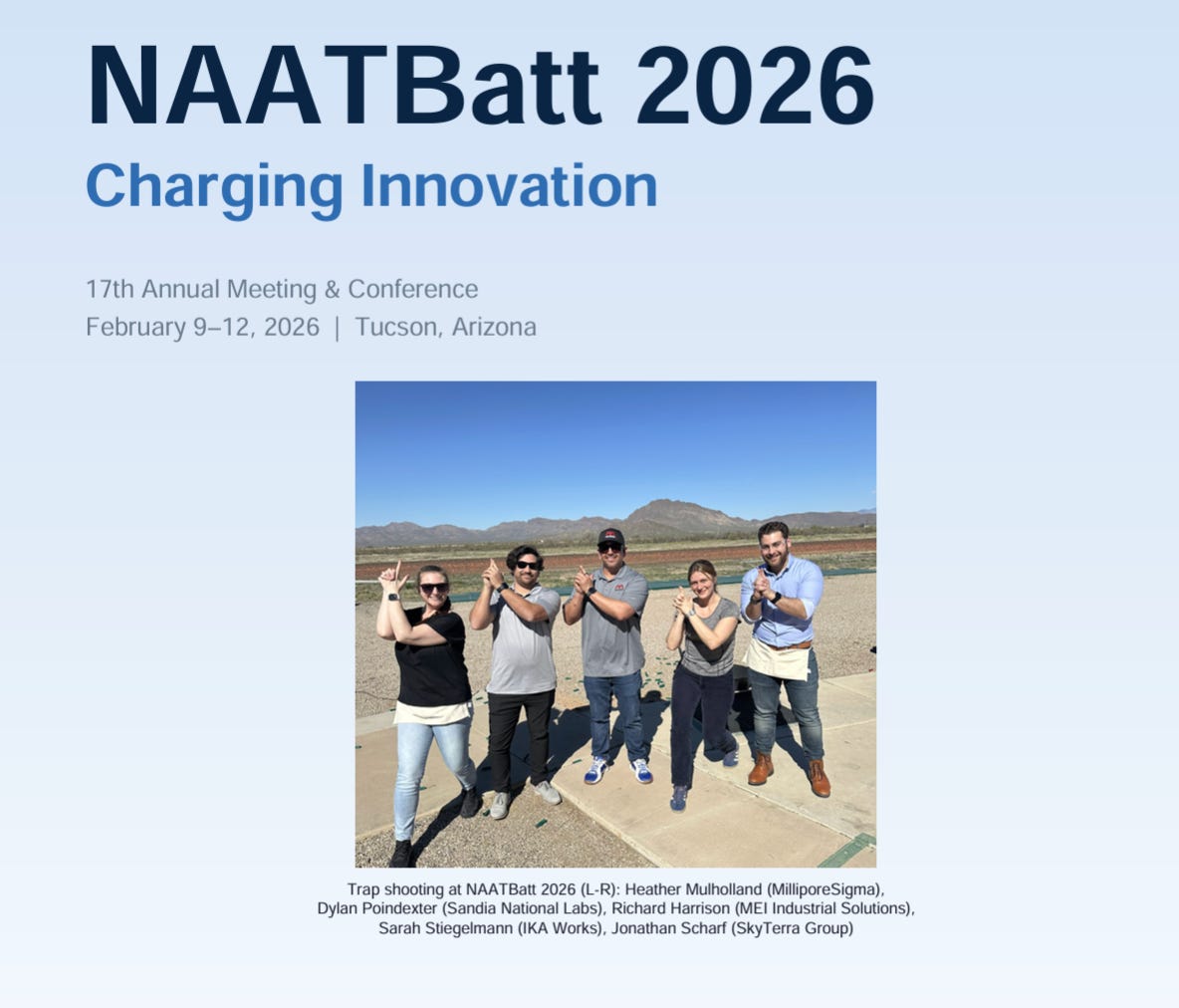
One of the strongest themes emerging from NAATBatt 2026 is that the industry is entering a new phase, one where reliability, manufacturability, and infrastructure readiness increasingly determine competitive advantage.
This shift is happening because batteries are no longer niche components. They are becoming critical infrastructure.
As AI accelerates data center construction, utilities deploy more energy storage, and defense agencies tighten domestic sourcing requirements, the consequences of battery failure become much larger than replacing a defective cell. Reliability now affects power grids, national security, and billions of dollars in infrastructure investment.
The conference reflected this transition clearly.
Conversations focused less on breakthrough chemistries and more on defect detection, non-destructive testing, compliance engineering, and manufacturing quality. Advanced CT scanning, ultrasound inspection, and self-discharge screening are moving from specialized tools to production requirements because identifying rare defects before deployment is becoming more valuable than extracting marginal improvements in performance.
Another recurring theme was the relationship between AI and energy infrastructure.
As keynote speakers discussed rapidly increasing data center demand, the limiting factor is no longer compute capacity alone. Power delivery, interconnection timelines, and energy storage are becoming the constraints shaping future growth.
This changes how battery technology is evaluated. Success increasingly depends not simply on producing better cells, but on delivering systems that utilities, operators, regulators, and customers can trust at scale.
Perhaps the most important takeaway is that evidence is replacing claims.
Manufacturers are no longer differentiated solely by specifications. They are increasingly differentiated by validation, traceability, safety data, and demonstrated operational performance.
The next decade of battery innovation may therefore be defined less by discovering entirely new chemistries and more by proving which technologies can be deployed reliably across increasingly complex infrastructure.
At SkyTerra, these are exactly the kinds of cross-industry signals we monitor. Understanding how battery technology, AI infrastructure, energy storage, manufacturing, and policy intersect is becoming essential for organizations making long-term strategic decisions, not because these trends exist independently, but because they are converging into a single infrastructure challenge.
Please see the attached full copy of the TBDA article: NAATBatt 2026
If you’re looking to connect with others building across energy, AI, and infrastructure:
👉 Join the SkyTerra Network: https://dashboard.skyterragroup.org/apply-to-join
Stay connected:
LinkedIn: skyterragroup.org
Instagram: https://www.instagram.com/skyterragroup/
Facebook: https://www.facebook.com/Skyterragroup/
YouTube: https://www.youtube.com/@Sky-Terra
Website: https://www.skyterragroup.ai/
Newsletter: https://dashboard.skyterragroup.org/newsletter/subscribe